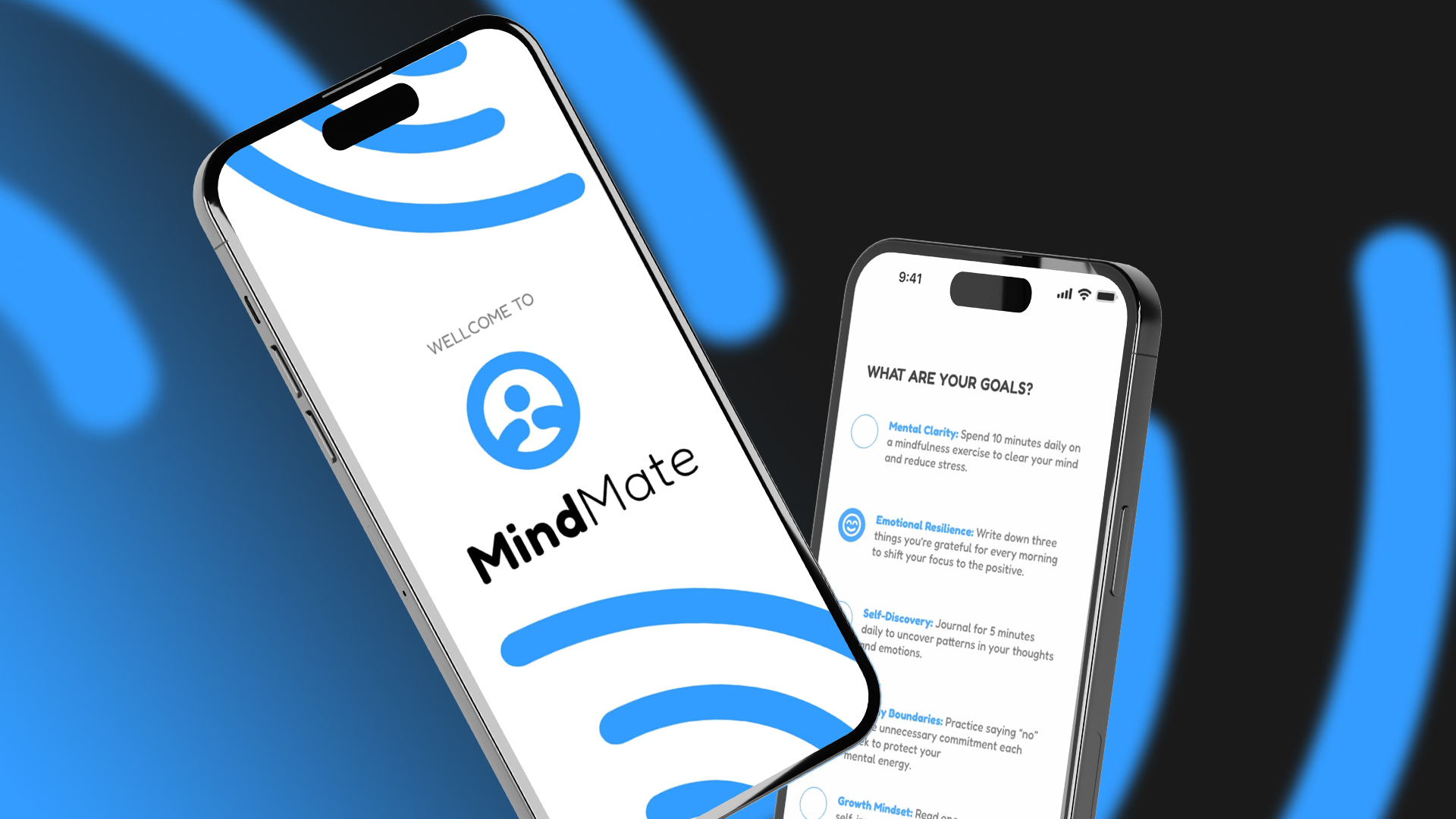

A mobile app designed to support men with mood tracking, journaling, and self-guided emotional tools—without stigma or judgment.
Research Insights
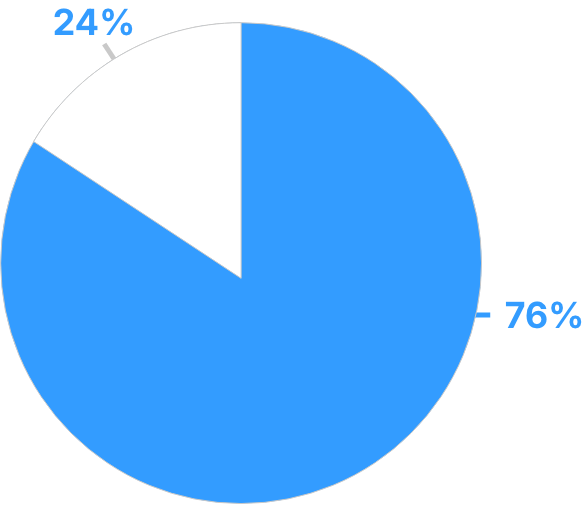
75% don’t talk about their feelings
62% don’t journal because it feels “too soft”
80% said they’d use a tool that feels private and non-judgmental
The College Guy
Wants to gain control of his emotions and reduce anxiety but struggles with overthinking and lack of routine, so needs easy check-ins and non-judgmental tools.

The Working Professional
Wants daily emotional balance but feels too busy for journaling, so needs quick and discreet tools.

The New Father
Wants emotional clarity and confidence as a dad but feels guilty expressing vulnerability, so needs guided prompts and a privacy-first UX.
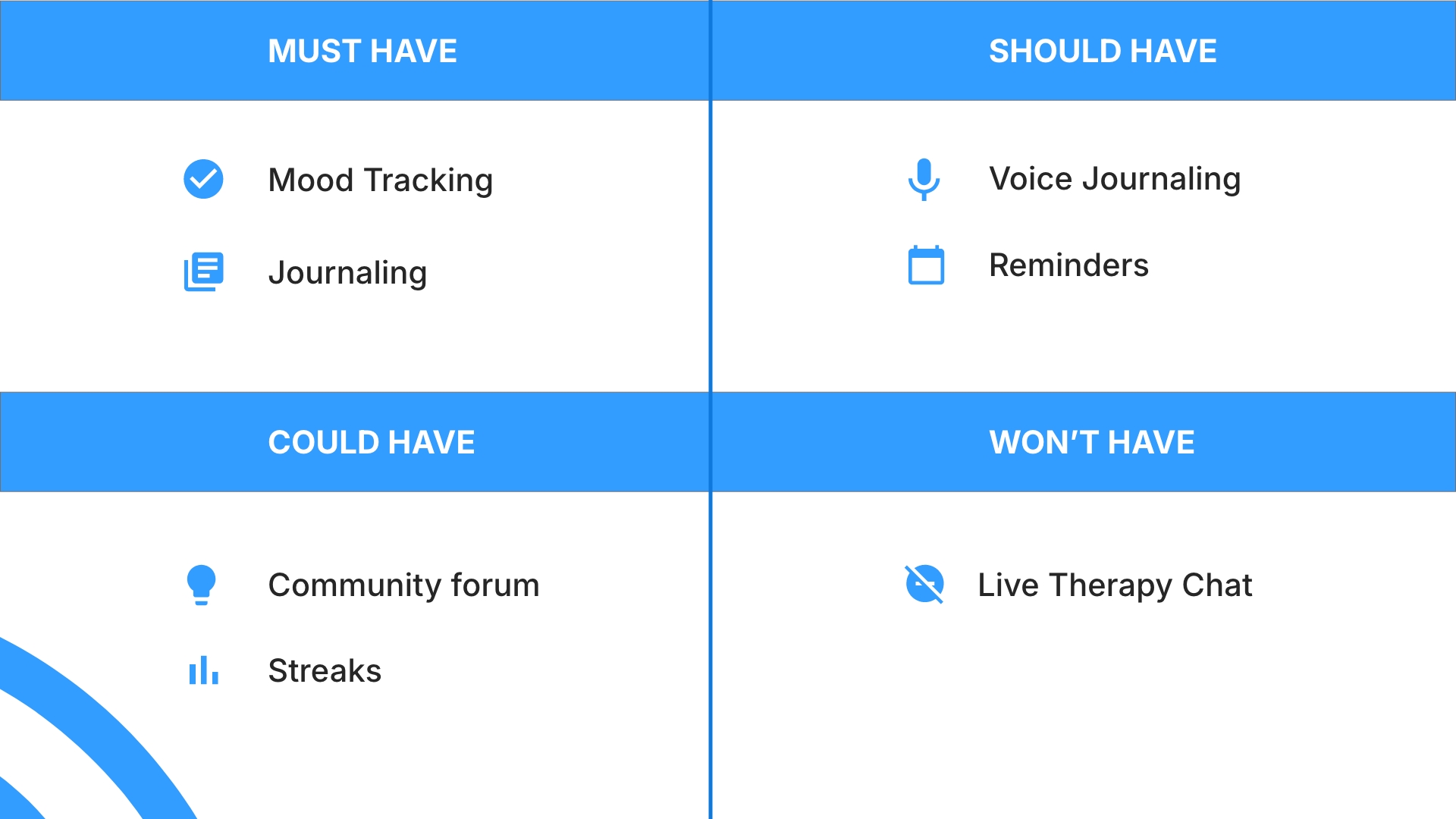
Feature Priority Breakdown
Using MoSCoW mapping, I prioritized essential MVP features.
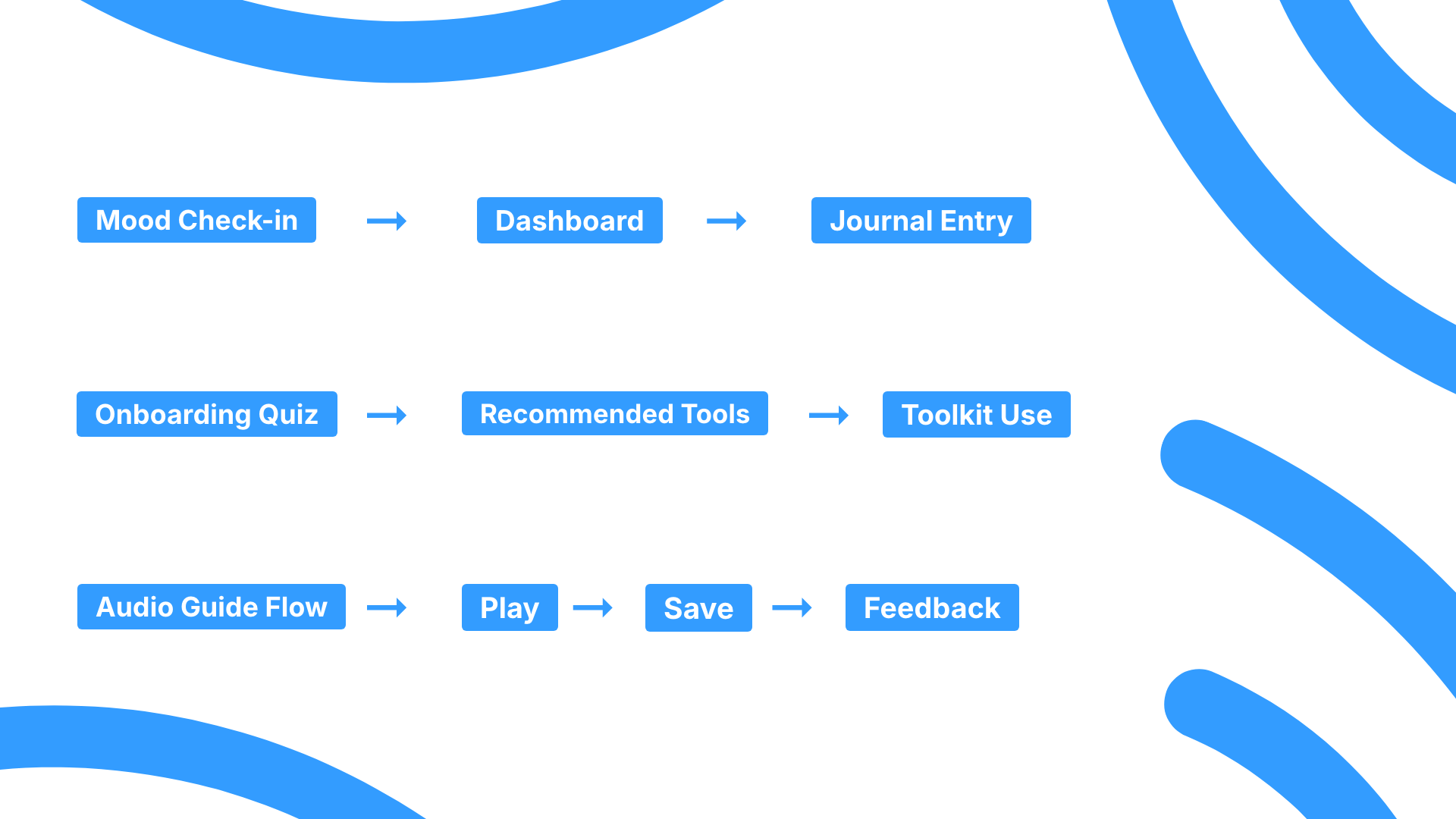
How Users Navigate MindMate
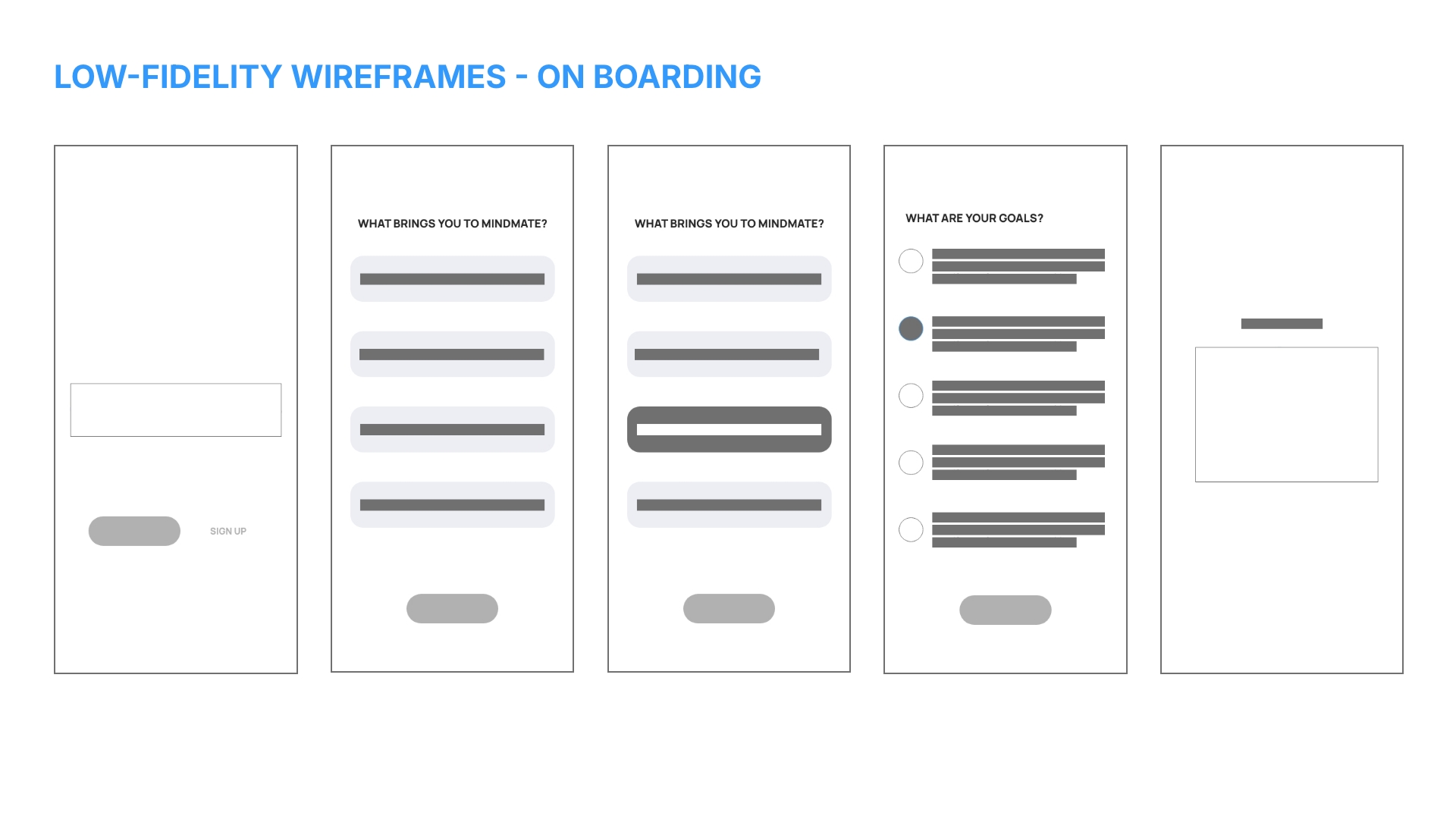
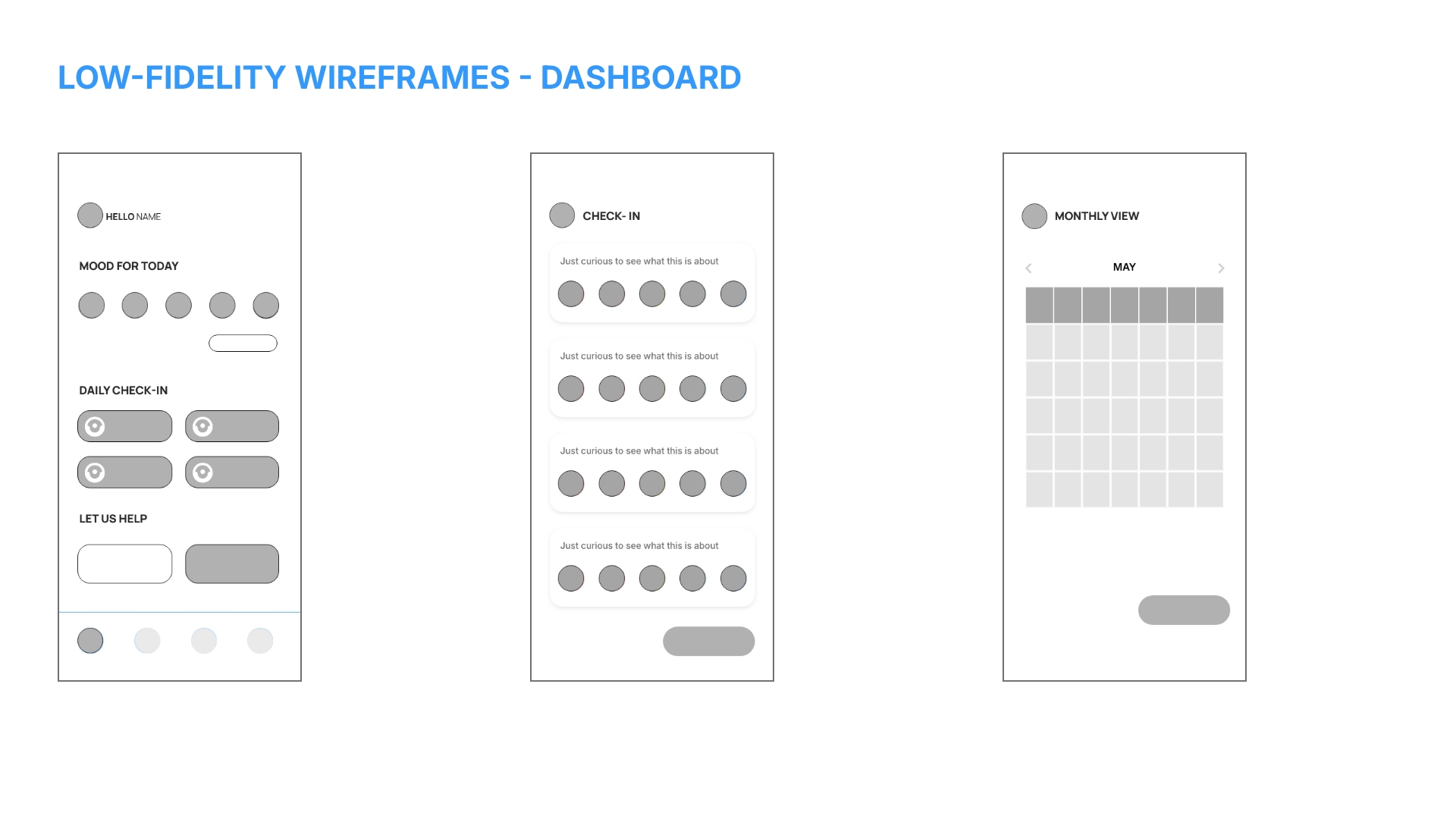
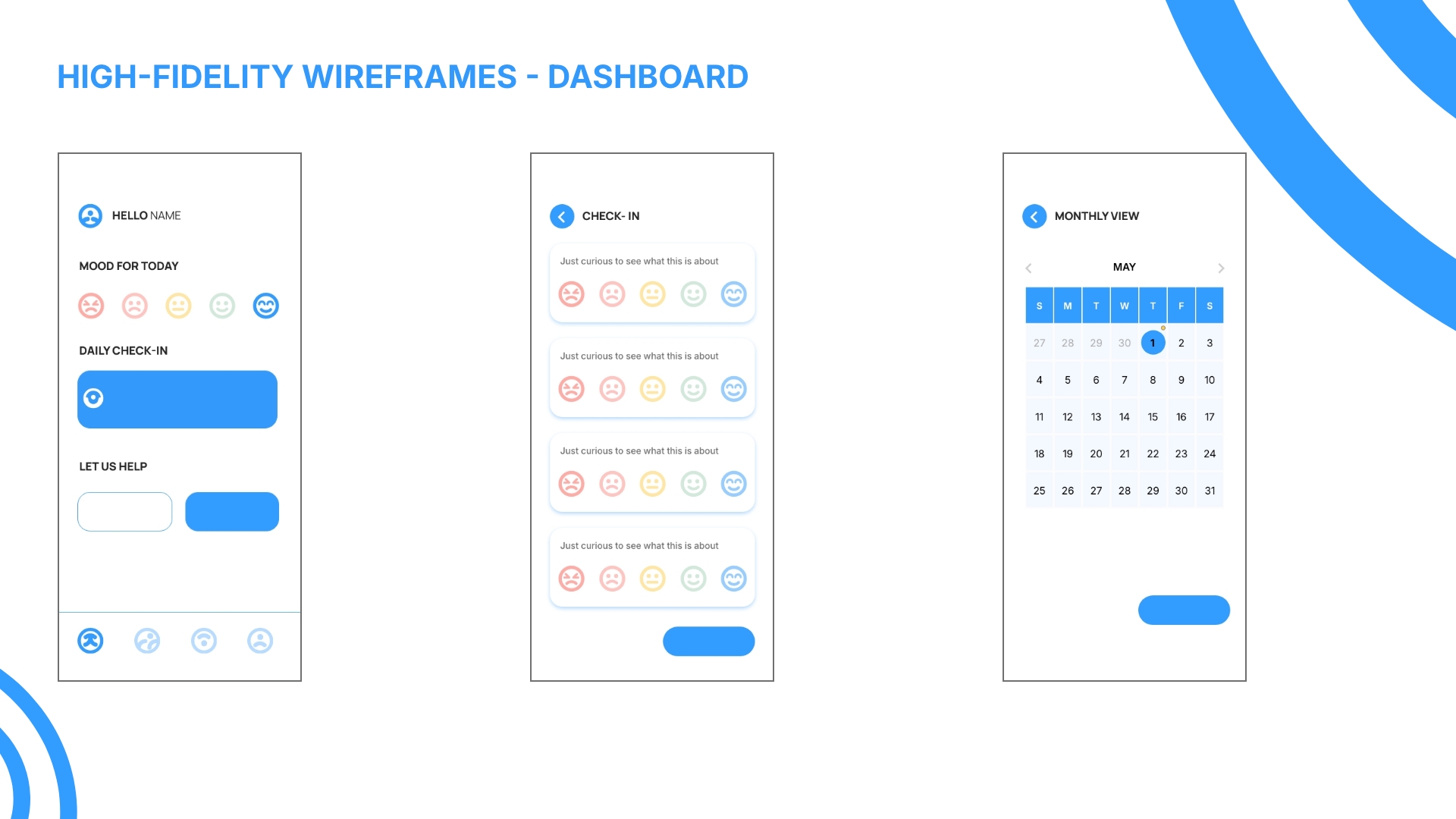
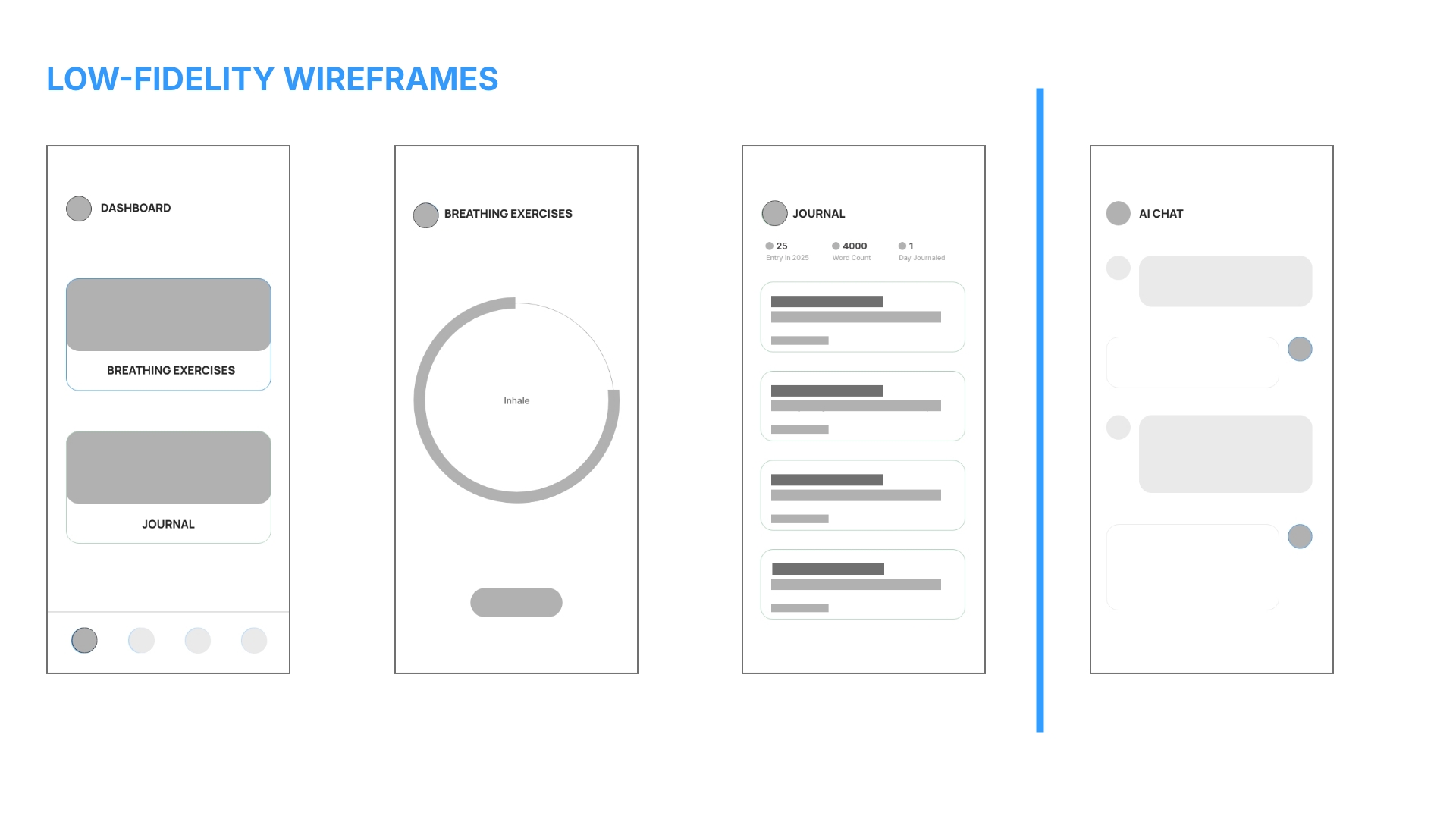
Early Wireframes & Interaction Mapping
I began with low-fidelity sketches to validate ideas before jumping into visual design.
Before
After
Before
After
Before
After
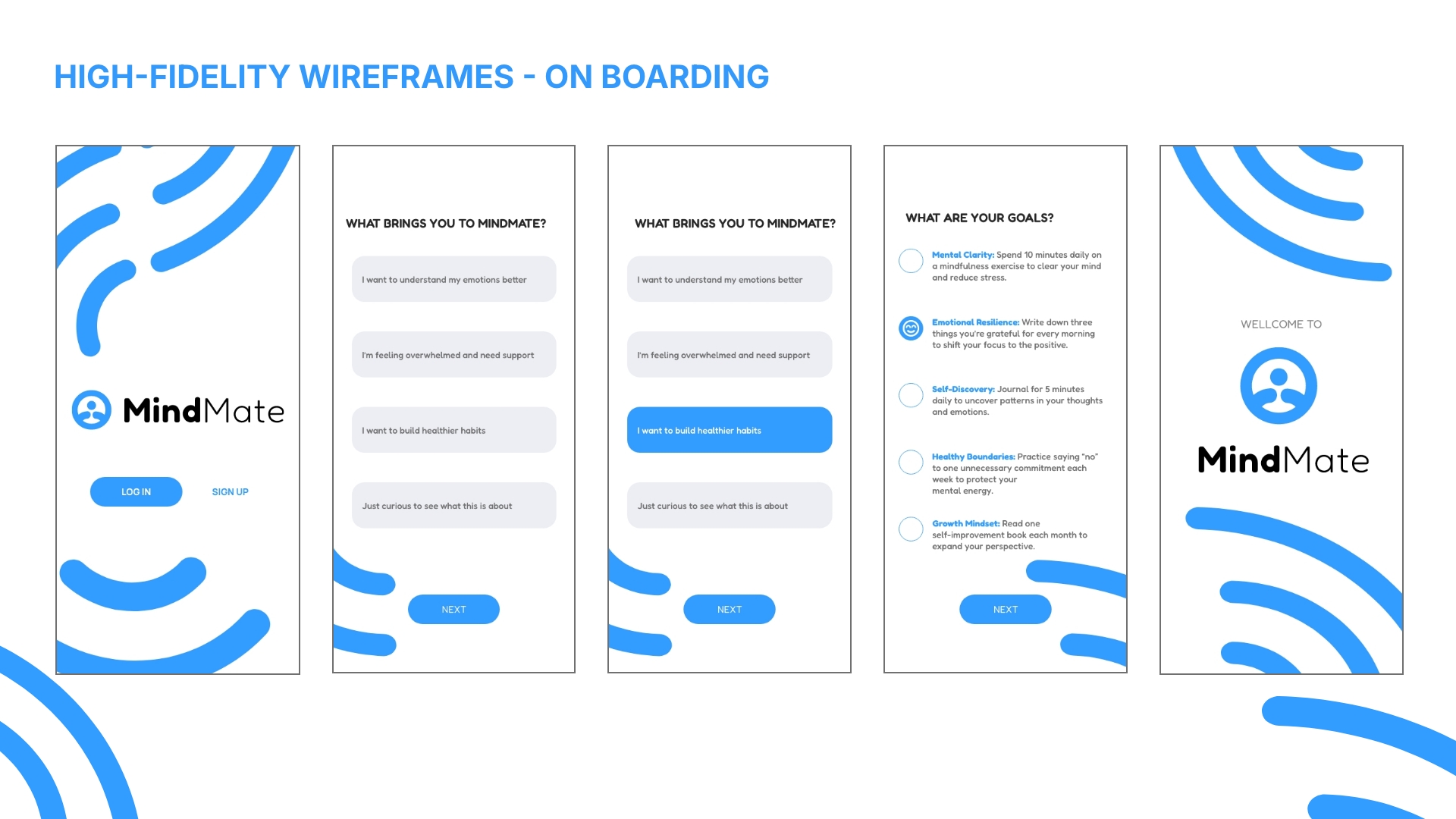
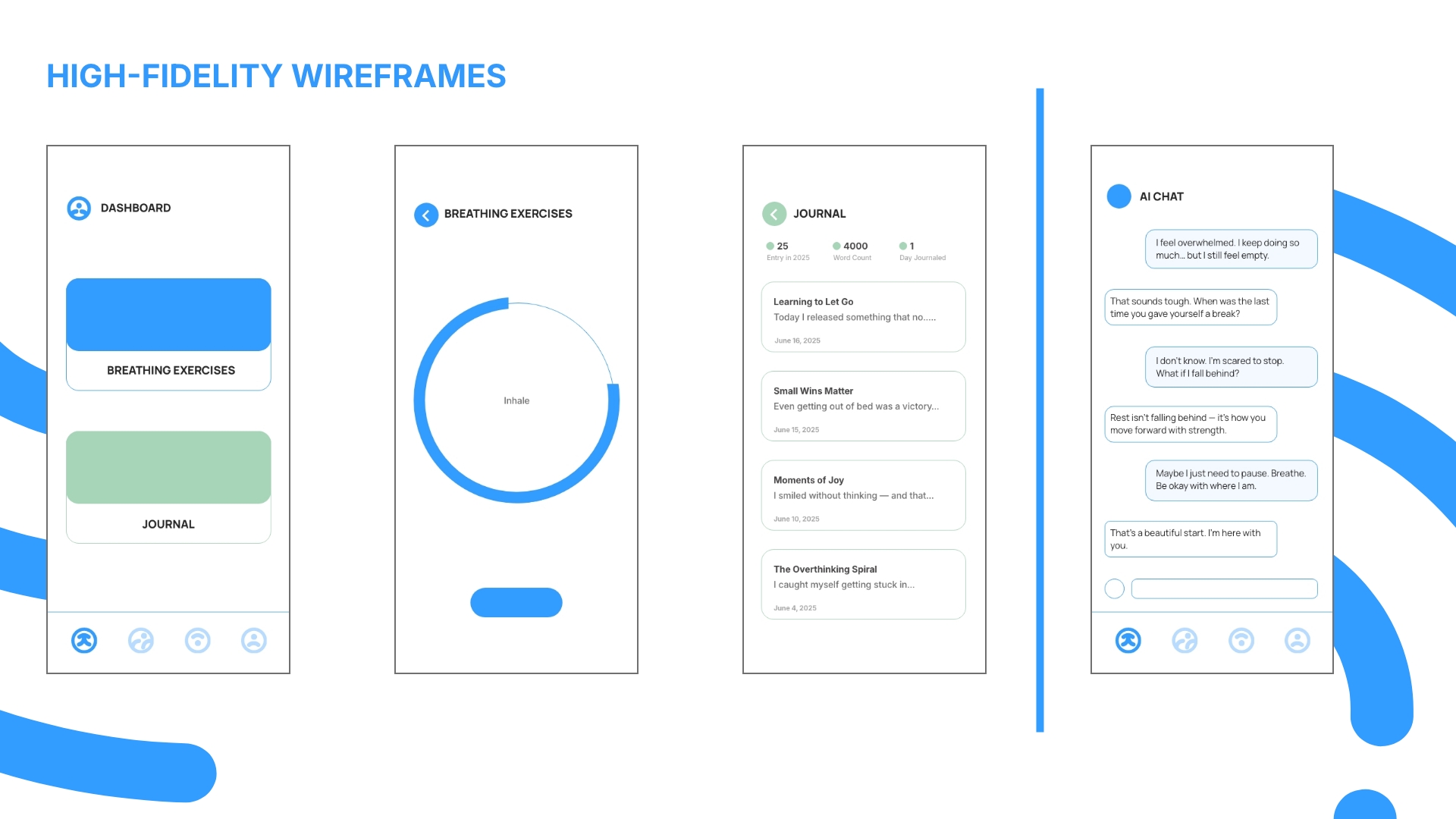
Final UI — A Safe Emotional Space
The final design is calm, masculine, and non-judgmental. I used color psychology and familiar mobile patterns to ease interaction.
Screens (show at least 6):
Welcome
Mood Check-in
Toolkit Dashboard
Journal Entry
Emotional Literacy Page
Profile / Settings
Toolkit Dashboard
What I Learned
Designing for men’s mental health taught me how small design choices can build—or break—emotional trust.
Final Summary
Simplicity Wins: Fewer steps = happier users.
Accessibility is a must: Improved contrast & touch targets.